Ansel Adams
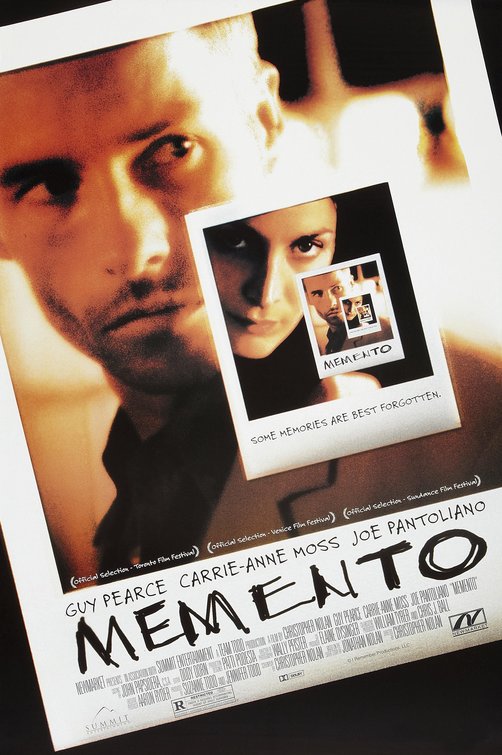
The film Memento and the short story Tamara both explore the topic of images and their meanings. In both works, numerous images are interpreted through the eyes of the protagonists and while that may seem liberating it also has its downsides.

In Italo Calvino's Invisible Cities, Marco Polo visits Tamara, a city where the streets are full of images, signs, and statues. In the film, Memento, the lead character Leonard Shelby, like Tamara, also uses images. Being that Leonard has short term memory loss, he snaps photographs of images so he can remember them in the future.
Tamara, like Leonard, is using images to define itself. When travelers leave the city, they take away only their interpretation of the images and not the images themselves. In a way, Tamara has no identity. Each and every traveler who goes to Tamara can have a completely different experience and a different interpretation of what he or she saw there.

In Memento, Leonard's pictures are not the past. They are images of the past that he can interpret in any way he so chooses. In a way, memory is the same thing. One's memory contains images of the past in one's mind that one can interpret in various ways. This begs the question does a person remember an exact image of his or her past or the interpretation of the image more?
In Marco Polo's case, it's the latter. He feels like he has not discovered the city of Tamara at all. He can't get past all the images to see what's really there. Leonard has the same problem. He also can't see what's really going on just by looking at his photos, which has dire consequences. Both the film and the short story show that sometimes we see what we want to see and that may be to our disadvantage.

No comments:
Post a Comment